


The Customer Support Revolution: AI vs. Human
In today’s digital landscape, businesses face a critical decision when designing their customer support infrastructure: embrace cutting-edge AI chatbots or rely on traditional human support teams. This choice impacts everything from operational costs to customer satisfaction rates.
As AI language models (LLMs) become increasingly sophisticated, the gap between machine and human capabilities continues to narrow. Yet traditional support systems maintain distinct advantages that AI hasn’t fully replicated. Let’s explore how these systems compare across key metrics to determine which might work best for your organization.
Understanding AI Chatbots: Beyond Basic Automation
Modern AI chatbots have evolved far beyond the simple rule-based systems of the past. Today’s solutions leverage Large Language Models (LLMs) like GPT-4, Claude, and Bard to understand context, detect sentiment, and generate natural-sounding responses.
Key Capabilities of Modern AI Chatbots:
- Natural Language Processing: Understand customer queries regardless of phrasing
- Contextual Understanding: Maintain conversation history to provide coherent responses
- Sentiment Analysis: Detect customer emotions and adjust tone accordingly
- Multilingual Support: Communicate in various languages without additional staff
- 24/7 Availability: Provide instant responses at any hour
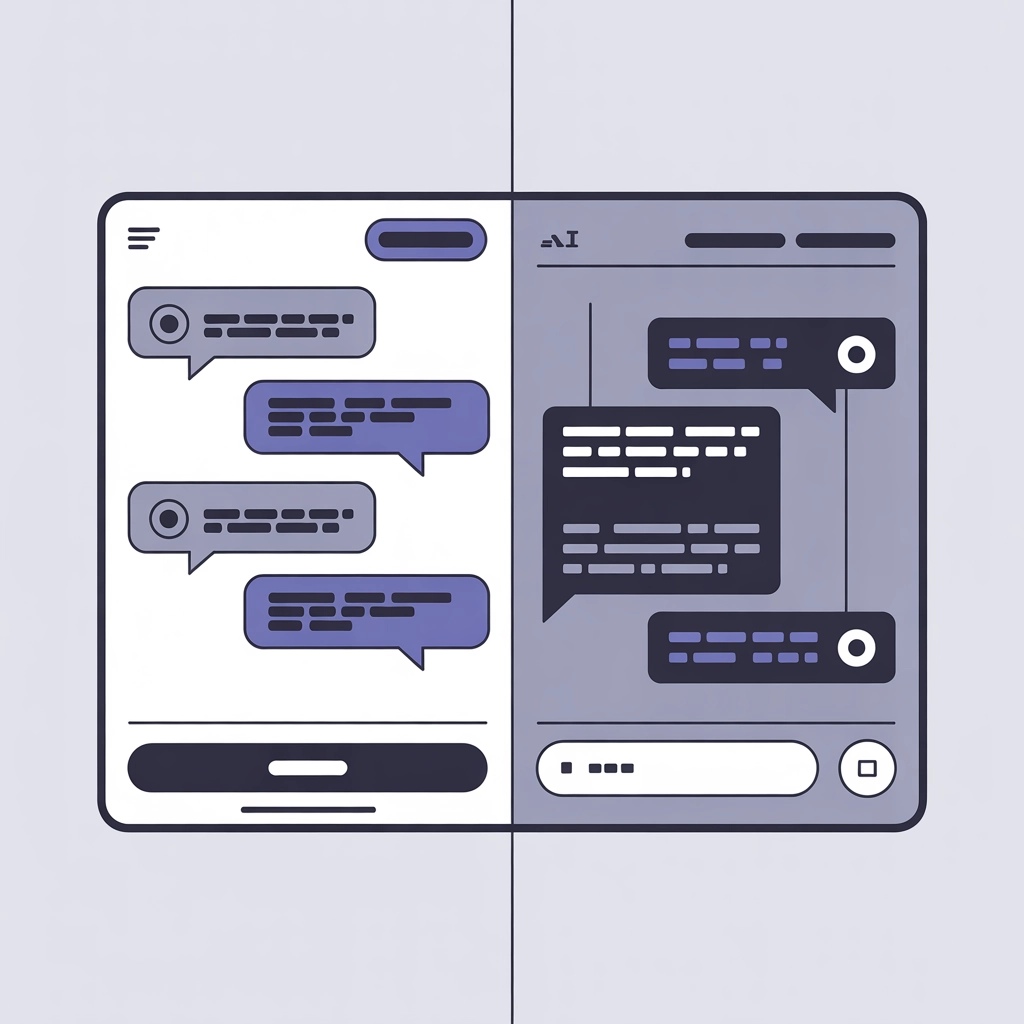
Alt: AI chatbot interface showing customer query resolution with natural language processing
Unlike basic chatbots, LLM-powered solutions can handle nuanced requests and even resolve complex issues without human intervention. For example, an advanced AI chatbot can walk a customer through troubleshooting steps, recommend products based on specific needs, or process refund requests following company policy.
Traditional Support Systems: The Human Touch
Traditional customer support typically involves human agents interacting with customers through various channels:
- Phone support (call centers)
- Email correspondence
- Live chat with human representatives
- In-person support desks
- Social media management teams
These systems rely on human judgment, empathy, and problem-solving abilities. Agents receive training on company products, policies, and customer service protocols, allowing them to handle everything from basic inquiries to complex disputes.
Head-to-Head Comparison: AI vs. Human Support
| Aspect | AI Chatbots | Traditional Support |
|---|---|---|
| Availability | 24/7/365 instant access | Limited to business hours or requires shift scheduling |
| Response Time | Immediate, even during peak periods | Variable; can have long wait times during high volume |
| Scalability | Handle unlimited concurrent conversations | Requires hiring and training additional staff |
| Cost | Higher upfront investment, lower long-term costs | Lower initial cost, higher ongoing expenses |
| Complex Issues | Improving but struggles with unique scenarios | Excel at nuanced problems requiring judgment |
| Emotional Intelligence | Limited ability to detect and respond to emotions | Natural empathy and emotional connection |
| Language Capabilities | Can support multiple languages simultaneously | Requires multilingual staff |
| Personalization | Data-driven but can feel mechanical | Genuine human connection and personalization |
The Cost Factor: Budget Implications
When evaluating support options, cost often becomes a deciding factor. Here’s how the financial picture breaks down:
AI Chatbot Costs:
- Implementation: $3,000-$50,000+ depending on complexity
- Ongoing Maintenance: $500-$2,000 monthly
- Training & Updates: Periodic costs for model improvements
Traditional Support Costs:
- Staffing: $30,000-$60,000 annually per full-time agent
- Training: $1,500-$5,000 per agent
- Infrastructure: Office space, equipment, software licenses
- Management: Supervisory staff, quality control teams
For many businesses, AI chatbots deliver significant ROI by handling a high volume of repetitive inquiries. A single chatbot can process thousands of conversations simultaneously, potentially replacing several full-time support positions.
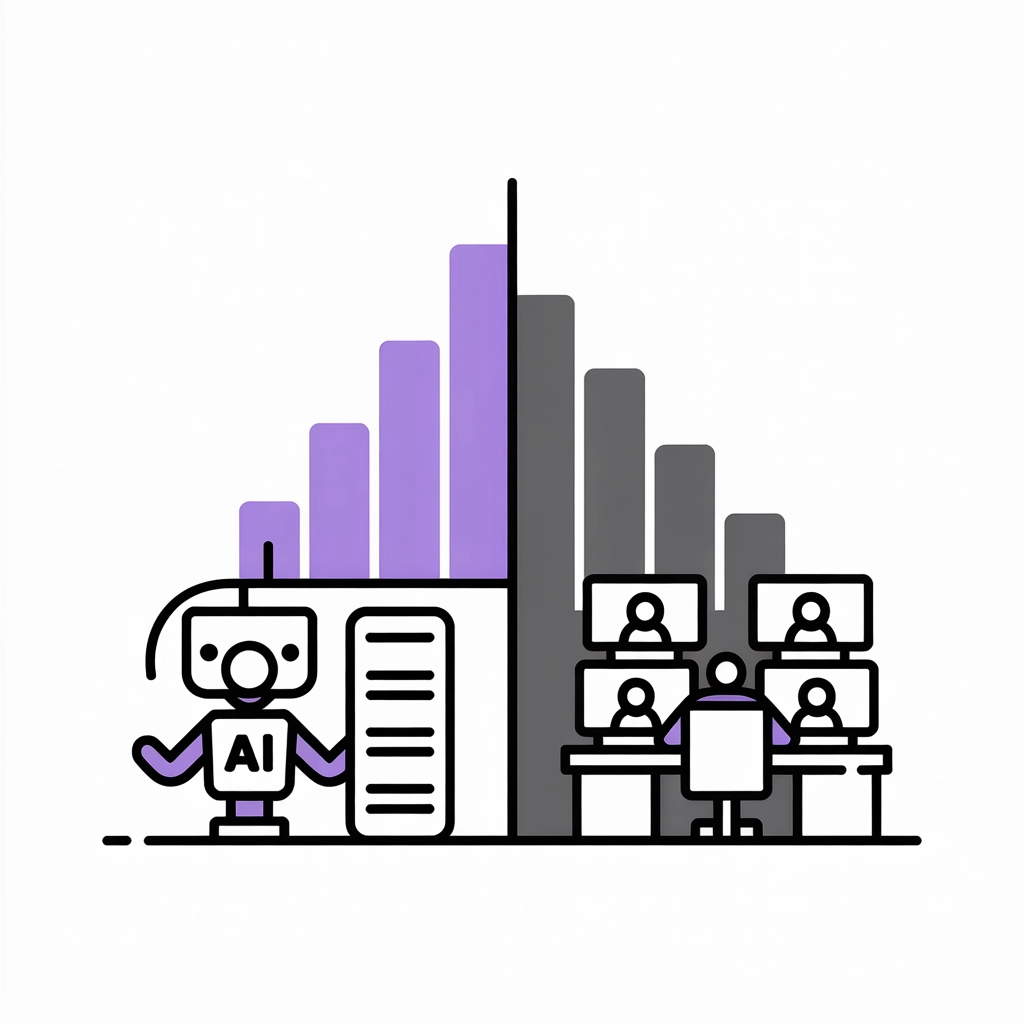
Alt: Graph comparing cost analysis of AI chatbot implementation versus traditional support team staffing
When AI Chatbots Shine: Ideal Use Cases
AI chatbots demonstrate clear advantages in several scenarios:
1. High-Volume, Repetitive Inquiries
Questions about business hours, return policies, or account activation represent the perfect use case for AI chatbots. These predictable queries follow patterns that LLMs excel at recognizing and responding to.
2. Initial Triage and Information Collection
Chatbots efficiently gather preliminary information before transferring to human agents when necessary. This approach reduces average handling time and improves overall efficiency.
3. After-Hours Support
While human agents sleep, AI chatbots continue addressing customer needs, ensuring global businesses maintain consistent support regardless of time zone differences.
4. Multilingual Requirements
Rather than staffing native speakers for every language, AI chatbots can accurately translate and respond in dozens of languages simultaneously.
When Human Support Prevails: The Irreplaceable Element
Despite technological advances, human support remains superior in several critical areas:
1. Complex Problem Resolution
Issues requiring judgment calls, policy exceptions, or creative solutions still benefit from human involvement. When a customer has a unique problem that doesn’t fit established patterns, human agents can think laterally to develop solutions.
2. Emotional Situations
Frustrated, angry, or upset customers often need empathy that AI systems can’t genuinely provide. Human agents can de-escalate tensions and create emotional connections that foster brand loyalty.
3. High-Value Customers
Premium clients or customers making significant purchases typically expect and deserve personalized human attention throughout their journey.
4. Technical Troubleshooting
Complex technical issues often require back-and-forth questioning and improvisational problem-solving that exceeds current AI capabilities.
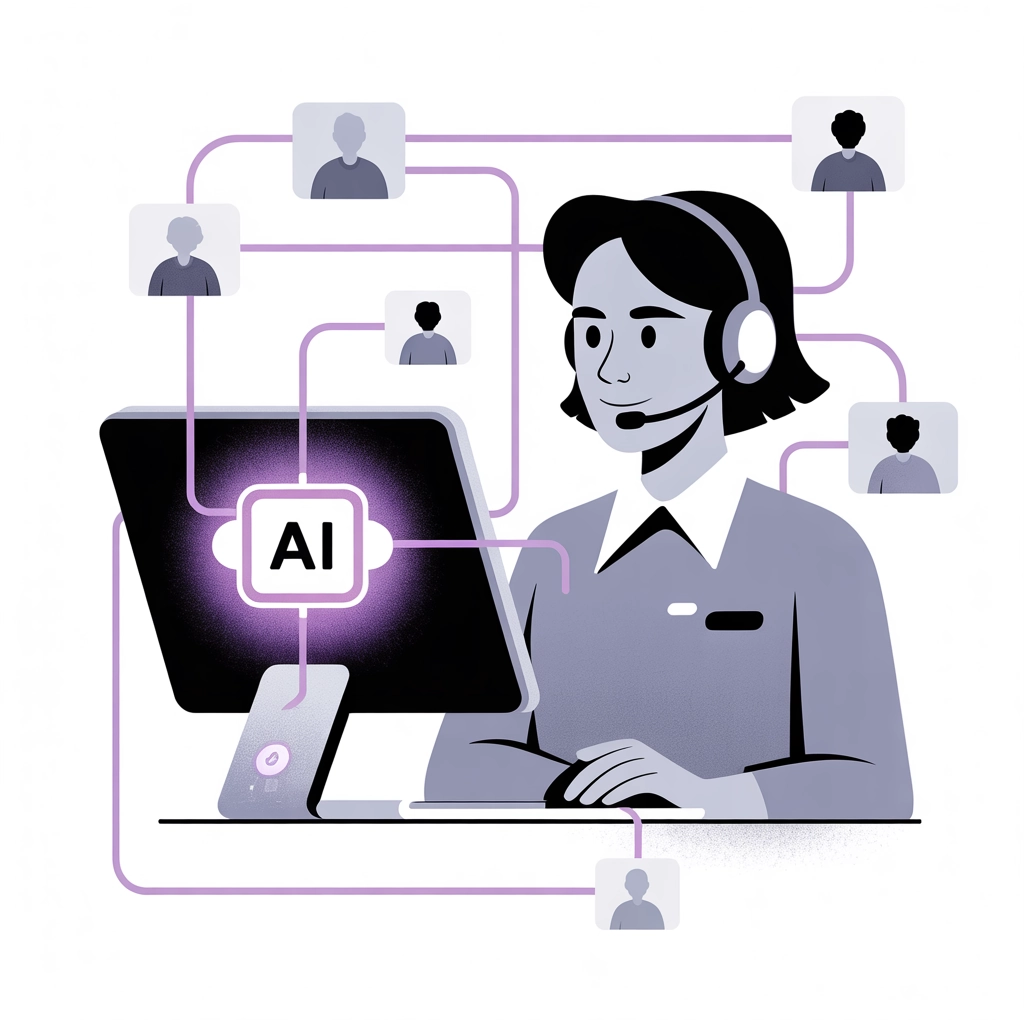
Alt: Customer service representative using hybrid AI chatbot system to handle complex support request
The Hybrid Approach: Best of Both Worlds
Most forward-thinking companies now implement hybrid support systems that leverage the strengths of both AI and human agents:
Tiered Support Structure:
- AI First Response: Chatbots handle initial contact, resolve simple issues, and collect information
- AI-Assisted Human Agents: For more complex issues, agents receive AI suggestions based on similar past cases
- Full Human Escalation: The most complex or sensitive issues transfer directly to specialized human agents
This approach typically yields:
- 70-80% reduction in simple, repetitive inquiries handled by human agents
- 25-35% decrease in average resolution time
- 15-20% improvement in customer satisfaction scores
- 40-60% cost savings compared to purely human support
Implementation Considerations: Getting Started
If you’re considering implementing or upgrading your support systems, consider these factors:
For AI Chatbots:
- Data Quality: Effective AI requires substantial training data from previous customer interactions
- Integration Requirements: How will the chatbot connect with your existing CRM and knowledge base?
- Customization Needs: Industry-specific terminology and processes may require custom training
- Handoff Protocol: Establish clear rules for when and how to escalate to human agents
For Traditional Support:
- Training Resources: Comprehensive onboarding and continuous education programs
- Quality Assurance: Monitoring systems to maintain consistent service standards
- Knowledge Management: Centralized information systems to support agent decision-making
- Performance Metrics: Clear KPIs to evaluate individual and team effectiveness
The Future Landscape: Where Support Is Headed
The future of customer support isn’t about choosing between AI and humans—it’s about creating intelligent systems where each complements the other:
- Predictive Support: AI identifying potential issues before customers report them
- Sentiment-Based Routing: Automated systems detecting customer emotions and directing accordingly
- Agent Augmentation: AI tools providing real-time guidance to human agents
- Voice-First AI: Conversational voice interfaces replacing traditional phone trees
As LLMs continue advancing, we can expect AI to handle increasingly complex inquiries while human agents focus on high-value interactions that build lasting customer relationships.
Making The Right Choice For Your Business
The optimal support solution depends on your specific business context:
- Business Type: B2B enterprises typically require more human involvement than B2C
- Customer Expectations: Premium brands may need to maintain higher human touch
- Issue Complexity: Technical products generally benefit from specialized human support
- Volume Patterns: Businesses with dramatic volume spikes benefit more from AI scalability
- Budget Constraints: Startups might begin with AI and add human support as they grow
The most successful organizations continuously evaluate their support mix, analyzing metrics like customer satisfaction, resolution time, and cost per interaction to refine their approach.
Conclusion: Finding Your Support Balance
There’s no one-size-fits-all answer to the AI versus traditional support question. The best solution typically involves strategic deployment of both technologies, with AI handling routine matters while human agents focus on complex issues requiring judgment and empathy.
By leveraging the unique strengths of each approach, businesses can create customer support experiences that are simultaneously efficient and emotionally satisfying—a combination that builds lasting customer loyalty in today’s competitive marketplace.
At ASEB Consulting, we help businesses design and implement customer support strategies that balance technological efficiency with the human touch. Contact us at https://asebconsulting.com/contact-social-media-web-design to discuss how we can optimize your support systems.